Introduction
In the world of business finance, terms like budget, departmental budget, forecast, and rolling forecast appear often. But what exactly do they mean, and how do they differ from one another? In this article, we dive into each of these concepts to understand their unique characteristics and applications.
The Annual Budget
An annual budget is a detailed plan that reflects the expected revenue and expenses for a specific period, usually a year. It helps companies to:
Set goals: By planning how much you expect to earn and spend, you can set clear financial targets.
Allocate resources: A budget allows you to decide where to spend your money and where you can save.
Measure performance: By comparing your actual revenue and expenses against your budget, you can see where you are on track and where adjustments are needed.
Departmental Budgets
A departmental budget is similar to the annual budget, but it is often more specific and focused on a particular area or department within a company. It can be seen as a financial blueprint that helps manage and control expenses within established limits. The benefits of budgeting at this level include:
Detailed tracking: This allows you to track specific cost centers, such as marketing or product development.
Accountability: Departments or teams have a clear picture of what they can spend.
Flexibility: Budgets can be adjusted throughout the year based on changing needs or circumstances.
Forecast
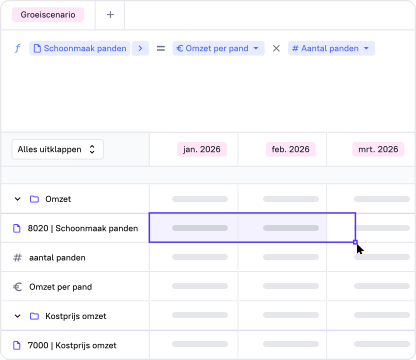
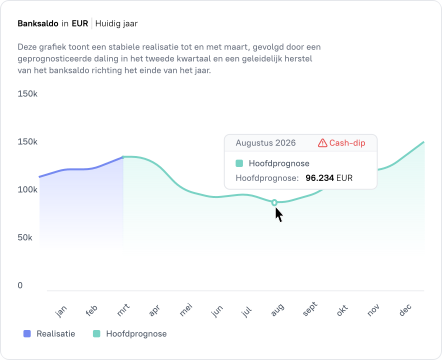
A forecast is an estimate of what will happen in the future based on historical data and current trends. Unlike a budget, which is often static, a forecast can be updated regularly as more information becomes available. Forecasts are useful for:
Future planning: This allows you to anticipate future financial needs or challenges.
Risk assessment: By predicting what might happen in the future, you can prepare for potential risks.
Strategic decision-making: Forecasts can help you decide where to invest or which markets to enter.
Rolling Forecast
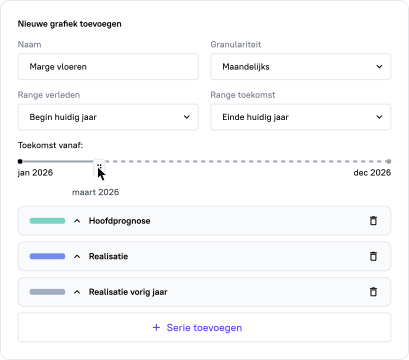
A rolling forecast is a type of forecast that is continuously updated. Instead of being limited to an annual review, a rolling forecast is usually updated every month or quarter, allowing companies to respond more flexibly to changing circumstances. The benefits include:
Adaptability: This allows you to respond quickly to changes in the market or within your company.
Continuous planning: Instead of planning once a year, you can continuously update your financial strategy.
Accuracy: By updating regularly, your forecasts are likely to be more accurate and relevant.
Conclusion
Whether you are drawing up an annual budget, managing a departmental budget, forecasting future revenue and expenses, or using a rolling forecast to remain flexible, each of these financial instruments plays a crucial role in the success of your business. By understanding how they work and when to use them, you can make better-informed financial decisions and lead your company toward growth and success.
Call to Action
Maintaining various financial forecasts, such as annual budgets, departmental budgets, and especially rolling forecasts, can be a challenge with traditional tools like Excel. Liquid is specifically designed to support all these forecasts, making the process streamlined and error-free. With Liquid, even maintaining a rolling forecast—which is usually the most time-consuming and complex task—becomes a breeze. Are you ready to take your financial planning to the next level and simplify your forecast management? Discover how Liquid can help you and contact us today for a personal consultation.