Introduction
The world of accountancy is complex and dynamic. In an era where technological innovations and societal changes are the norm, accountants must adapt continuously to serve their clients effectively. 2026 promises to be a year full of challenges and opportunities for the sector. Let's dive deeper into the specific trends that will influence accountants in the Netherlands this year.
The shift towards advisory roles
The role of accountants has evolved significantly over the years. Where they were once primarily seen as the 'number crunchers' of the business world, they are now increasingly viewed as integral partners in an organization's strategic planning. This shift is largely due to technological advancements, which have automated many of the traditional tasks of accountants.
Automation of routine tasks
With the rise of advanced accounting software, many routine accounting tasks, such as data entry and basic reporting, can now be performed automatically. This has freed accountants from time-consuming manual processes and allows them to focus on high-value tasks.
Strategic business planning
Instead of focusing solely on the past, accountants are now also involved in planning for the future. They work together with business leaders to create financial forecasts, identify investment opportunities, and develop strategies to achieve financial goals.
Added value for clients
The shift towards advisory roles means that accountants now offer a broader range of services extending beyond traditional accounting. Whether it's tax planning, risk management, or business advice, accountants are well-positioned to guide their clients through complex financial decisions.
In this changing landscape, it is essential for accountants to continuously update their skills and adapt to the evolving needs of their clients. By doing so, they can not only increase their value to clients but also expand their own career opportunities in a rapidly evolving industry.
Post-COVID digitalization
The COVID-19 pandemic has undoubtedly left a lasting impact on how businesses operate, and the accountancy sector is no exception. The sudden need to limit physical interactions and embrace working from home has accelerated digitalization within the industry. Below, we explore some of the most prominent changes and their lasting impact on the sector.
Transition to cloud-based systems
Before the pandemic, many accounting firms were already transitioning to cloud-based accounting systems. However, the pandemic accelerated this shift. Cloud systems not only offer the flexibility to access financial data anytime and anywhere, but they also ensure better data security and backups.
Remote work and client interaction
The pandemic has fundamentally changed the way accountants communicate with their clients. Physical meetings were replaced by video conferences and digital collaboration tools. This new way of working has not only increased efficiency but also removed geographical limitations, allowing accountants to now serve clients from all over the world.
Advanced data analysis and automation
With the increase in digital data, accountants now have access to advanced tools for data analysis. These tools enable them to gain deep insights, identify trends, and perform predictive analyses. Furthermore, automation tools make it possible to streamline routine tasks, allowing accountants to spend more time on advisory roles.
Future of accountancy in the digital age
Although the pandemic was the driving force behind rapid digitalization, it is clear that this trend will continue. Accounting firms that embrace technological advancements will be better positioned to compete in an increasingly connected and digital world.
In summary, post-COVID digitalization has transformed the accountancy sector, with technology taking center stage in how services are delivered and how accountants add value to their clients.
The challenge of staff shortages
The accountancy sector is known for its dynamic and demanding nature. However, in the Netherlands, this sector is facing a challenge that strikes at the core of its service delivery: a growing shortage of qualified personnel. This shortage has far-reaching consequences for both accounting firms and their clients.
Increased workload
A direct consequence of the staff shortage is the increased workload for existing employees. This can lead to longer workdays, less free time, and a higher risk of burnout. Moreover, an increased workload can affect the quality of work delivered, which can result in dissatisfied clients and potential reputational damage for the firm.
Need for training and development
To address the shortage of qualified personnel, many firms are investing in intensive training and development programs. This includes not only technical training but also soft skills and leadership development. By investing in the growth and development of their employees, firms hope to attract and retain talent.
Automation and technological investments
Another approach to tackling the staff shortage is investing in technologies that can automate routine tasks. By utilizing advanced software and tools, accounting firms can streamline processes, increase efficiency, and reduce the workload for their employees. This not only enables them to serve more clients but also ensures that their employees can focus on more complex and valuable tasks.
Future implications
The staff shortage in the accountancy sector is not just a temporary problem. It has the potential to fundamentally change how firms operate. Firms that are proactive in addressing this challenge—whether by attracting new talent, investing in training, or embracing technology—will be better positioned to flourish in the future.
The staff shortage in the Dutch accountancy sector is an urgent problem requiring a coordinated and innovative approach. By acting now, firms can position themselves for long-term success.
Sustainability and ESG reporting
In recent years, the world has seen a shift towards a more responsible and sustainable way of doing business. This trend has led to a greater emphasis on Environmental, Social, and Governance (ESG) criteria within companies. For accountants, this means an evolution in their role and responsibilities.
The growing demand for ESG reporting
More and more stakeholders, including investors, customers, and regulatory bodies, are demanding transparency regarding companies' ESG performance. This has led to an increase in the demand for detailed ESG reports that go beyond traditional financial reporting.
Role of the accountant
Accountants play a crucial role in guiding companies through this new landscape. They are expected not only to assist in compiling ESG reports but also to ensure the accuracy and reliability of these reports. This requires thorough knowledge of the latest ESG standards and regulations.
Broader societal and environmental trends
Beyond regulations, accountants must also be aware of broader societal and environmental trends. This can range from the impact of climate change on business operations to consumer expectations regarding corporate social responsibility. By having a deeper understanding of these trends, accountants can better advise their clients on potential risks and opportunities.
Challenges and opportunities
While the shift towards ESG reporting brings challenges, such as keeping up with constantly changing regulations, it also offers opportunities for accountants. They can position themselves as experts in sustainability and ESG, allowing them to offer more value to their clients and distinguish themselves in a competitive market.
In conclusion, the emphasis on sustainability and ESG reporting is no longer an optional consideration for companies. It is an essential part of modern business. For accountants, this represents an opportunity to expand their expertise and play a leading role in the transition to a more sustainable and responsible business world.
Cybersecurity and data protection
In the digital age we live in, the protection of sensitive information is of the utmost importance. For accounting firms, which often have access to confidential financial data of their clients, cybersecurity is not just a technical necessity, but also a crucial aspect of the trust clients place in them.
The growing threat of cyberattacks
In recent years, we have seen an increase in targeted cyberattacks on financial institutions and service providers. These attacks range from ransomware attacks, where data is held hostage for ransom, to advanced phishing attacks aimed at stealing financial data.
Importance of advanced security measures
To counter these threats, accounting firms must invest in advanced security measures. This includes not only traditional firewalls and antivirus software but also advanced threat detection systems, data encryption, and regular security audits. Furthermore, it is essential to train employees on cybersecurity best practices, as human error often plays a role in security breaches.
Complying with the GDPR and other regulations
In addition to protecting against external threats, accounting firms must also comply with strict regulations regarding data protection, such as the General Data Protection Regulation (GDPR). This means firms must have clear procedures for collecting, storing, and sharing client data. They must also be able to respond quickly to data breaches and inform clients when their data may be compromised.
Building trust with clients
In a time when data breaches regularly make the news, an accounting firm's ability to protect its clients' data can be a major differentiator. Clients want to know that their financial information is safe, and firms that can demonstrate they are serious about cybersecurity will likely have a competitive advantage.
To conclude: in today's increasingly connected and digital world, cybersecurity is no longer an optional area for accounting firms. It is an essential investment needed to protect client data, comply with regulations, and maintain client trust.
The rise of AI: The influence of ChatGPT and similar technologies
Artificial intelligence (AI) has undergone a rapid evolution in recent years, with technologies like ChatGPT at the forefront of this revolution. ChatGPT, developed by OpenAI, is an example of how advanced language models can transform the way we communicate and process information.
For the accountancy sector, AI offers the possibility to analyze large amounts of financial data quickly and accurately, improving the precision of predictions and analyses. ChatGPT and similar systems can be deployed for tasks such as answering client questions, automating routine accounting tasks, and even advising on complex financial scenarios.
Although the current impact of ChatGPT on the accountancy sector is already noticeable, the most disruptive effects of this technology are expected to become visible from 2026 onwards. As AI systems become more advanced and better integrated into accounting tools and platforms, they will likely redefine many of the traditional roles and tasks within the sector.
It is essential for accountants to be aware of these emerging technologies and prepare for the changes they bring. By proactively investing in training and exploring the possibilities of AI, accounting firms can position themselves to make the most of the benefits of this technological revolution.
Real-time reporting and insight: A crucial trend for accountants in 2026
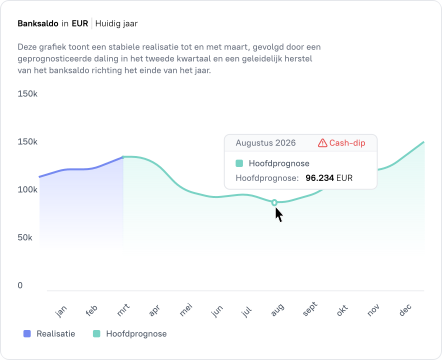
The financial world is always in motion, and 2026 is no exception. One of the most striking trends for accountants this year is the shift towards real-time reporting and insight. In an era where companies must react faster than ever to changing market conditions, direct access to financial data offers an indispensable advantage.
Immediate decision-making: Real-time data enables accountants to advise their clients to react immediately to business opportunities or threats, resulting in a more proactive approach to financial management.
Increased accuracy: Continuously updated data minimizes the chance of errors, leading to more reliable financial reports and forecasts.
Better stakeholder management: With real-time insight, accountants can help their clients keep stakeholders up-to-date, which strengthens trust and relationships.
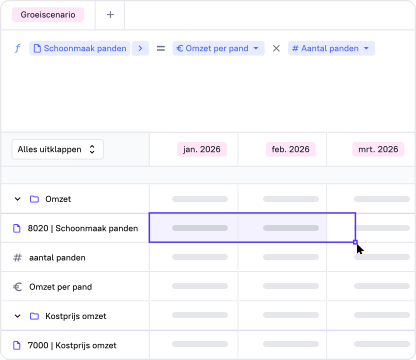
Liquid, a tool born from the needs of entrepreneurs, addresses this trend by offering the SME market in the Netherlands a platform for flawless financial forecasting and reporting in real-time. For accountants, this means an opportunity to improve their service delivery, offer more value to their clients, and reinforce their role as strategic advisors.
As an accountant, you are always looking for ways to improve your service and offer your clients the best tools and insights. In light of the trends of 2026, it is essential to stay ahead of the curve. Discover how Liquid can support you in this shift towards real-time reporting and insight. Make the switch today and ensure that you and your clients are ready for the future of financial analysis!