Gross Profit and Gross Margin Explained
In the world of finance and operations, there are countless terms and concepts essential for understanding the health and success of a business. Two of these key terms are gross profit and gross margin. Although closely related, they represent different financial indicators that offer key insights into a company's operational efficiency and profitability. In this article, we will explore these concepts thoroughly, explain their importance, and show how they are calculated.
What is Gross Profit?
Gross profit, often referred to simply as profit before overheads, is a financial metric that reflects the direct profitability of a company's sales activities. It is calculated by subtracting the cost of goods sold (COGS) from total revenue. This result shows how much a company has left over after paying the direct costs associated with producing its goods or services.
The Importance of Gross Profit
Gross profit is a crucial indicator for businesses because it offers insight into the efficiency of their production and sales processes. A high gross profit suggests that a company is selling its goods or services at a significantly higher price than it costs to produce them, indicating a healthy profit margin. On the other hand, a low gross profit can point to high production costs or pricing that is too low, potentially leading to financial difficulties.
Additionally, gross profit helps companies make strategic decisions regarding pricing, cost control, and product development. By analyzing the gross profit margin, companies can identify areas where efficiency improvements are possible.
Calculating Gross Profit
The formula for calculating gross profit is relatively simple: Gross Profit = Total Revenue - Cost of Goods Sold (COGS). Total revenue refers to the total income from the sale of goods and services, while COGS represents the direct costs incurred to produce or purchase those goods or services.
It is important to note that COGS includes only direct costs, such as raw materials and labor, and excludes fixed costs or overhead, such as rent or administrative salaries.
What is Gross Margin?
Gross margin is a financial ratio that expresses gross profit as a percentage of total revenue. It provides a clear picture of the percentage of revenue that remains after deducting the direct costs of the goods or services sold. Gross margin is an essential metric for a company's profitability, as it indicates how much of every euro of revenue is available to cover other costs and generate profit.
The Importance of Gross Margin
Gross margin is a key indicator for both companies and investors, as it provides insight into a company's operational efficiency and profitability. A high gross margin points to strong pricing and control over production costs, while a low gross margin can indicate the opposite.
By comparing a company's gross margin with that of competitors, investors and business leaders can assess the company's competitive position. Furthermore, tracking gross margin over time can help companies identify trends and make timely adjustments to their business strategy.
Calculating Gross Margin
Gross margin is calculated using the following formula: Gross Margin = (Gross Profit / Total Revenue) x 100. This result is expressed as a percentage, making it easy to compare the profitability of different companies or business segments, regardless of their revenue size.
It is important for businesses not only to know their gross margin but also to understand how changes in revenue or COGS can affect this margin. This insight is crucial for effectively managing long-term profitability.
Liquid as a Tool for Healthy Profitability
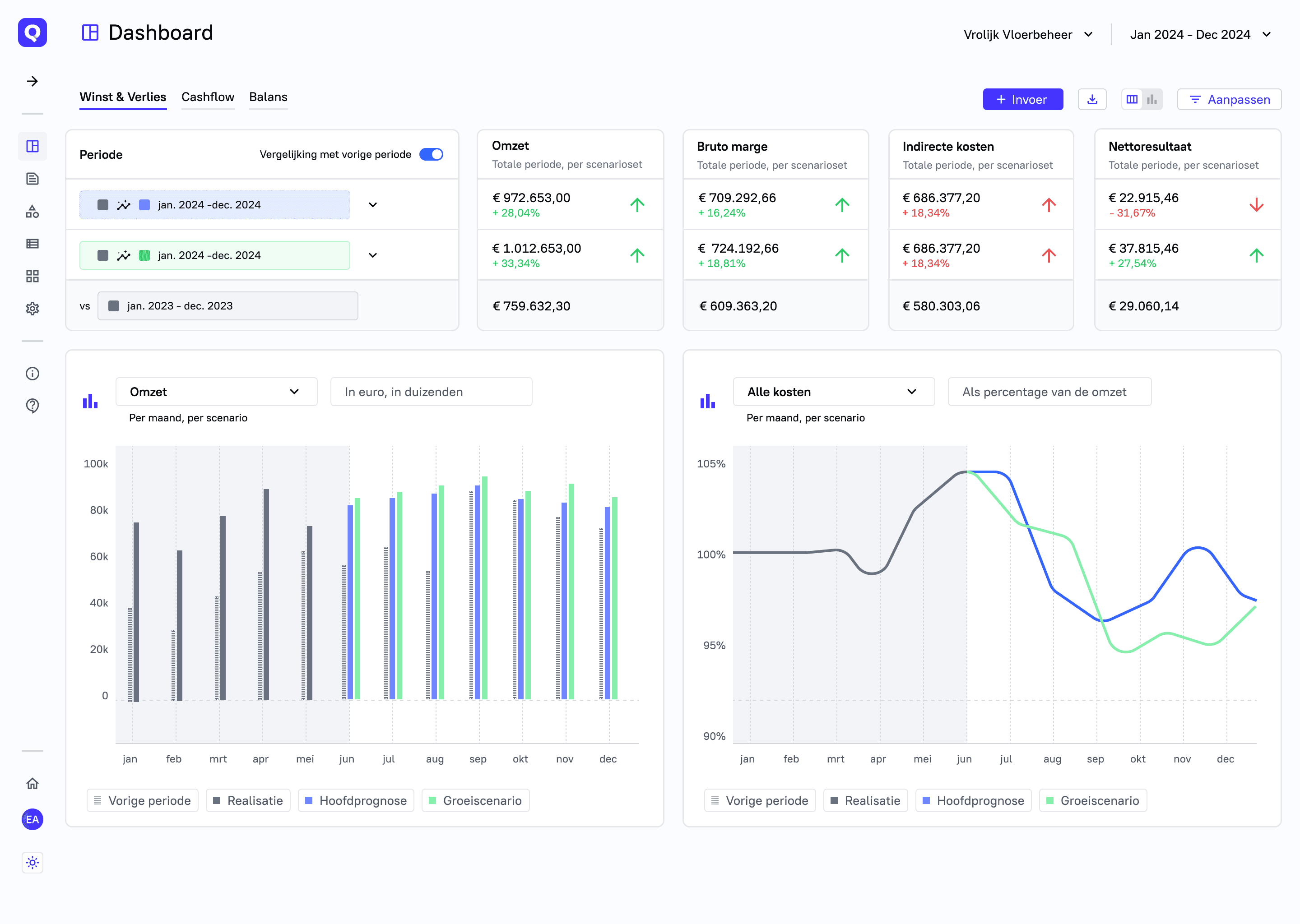
Accurately monitoring your gross profit and gross margin is essential for ensuring the financial health of your business. Liquid offers an advanced platform that helps companies analyze these crucial financial indicators in real-time. Whether you are a business owner needing more insight into your financial reporting, or a CFO looking to optimize the profitability of different business units, Liquid offers the tools and reporting capabilities you need.
With Liquid, you can not only effectively manage your gross profit and gross margin, but also gain deep insights that help you make strategic decisions contributing to sustainable growth. Discover how Liquid can support your company in optimizing profitability by using our solutions for business owners and accountants.
Conclusion
Gross profit and gross margin are two fundamental financial metrics essential for assessing a company's operational efficiency and profitability. By understanding and analyzing these indicators, companies can make better strategic decisions, assess their competitive position, and ensure their long-term financial health. It is therefore of crucial importance for business leaders and finance professionals to have a thorough knowledge of these concepts and evaluate them regularly.